

How to Choose the Right Insulation Material for Industrial Pipelines
A practical guide for oil & gas, petrochemical and industrial facilities
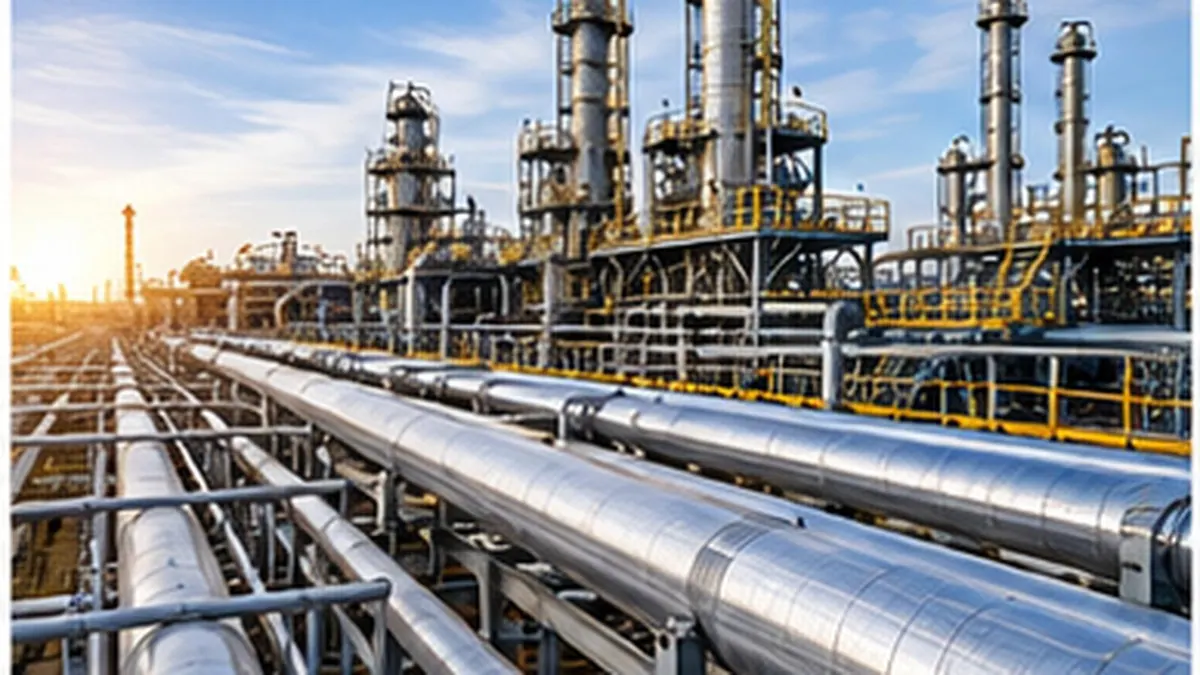
Industrial pipeline insulation controls heat transfer between the process fluid, pipe wall and surrounding environment. The right system can maintain process temperature, reduce energy loss or heat gain, protect personnel, limit condensation and support reliable operation. Insulation is a complete system—not just a material. It includes insulation, joints, support details, vapour or weather barriers, cladding, fasteners and seals.
Key Takeaways: Selecting Industrial Pipeline Insulation
- Define Service First: Establish fluid type, normal/design temperatures, cycling, environment (onshore, coastal, offshore), pipe geometry, fire requirements, and project standards before shortlisting products.
- Match Material to Duty: Compare Mineral Wool (hot piping), Cellular Glass (rigid closed-cell moisture control), Aerogel Blankets (space/weight constraints), and PUR/PIR (selected lower-temperature duties) using current manufacturer datasheets.
- Engineer Economic Thickness: Compare thermal conductivity (k or λ) at matching mean temperatures, calculate economic thickness over service life, and detail thermal bridges at supports, shoes, valves, and flanges.
- Control Moisture & CUI: Pair approved coatings and continuous vapour retarders with water-shedding cladding and risk-based inspection—no insulation material alone prevents CUI.
- Specify for Lifecycle & Handover: Never insulate wet, uninspected, or unaccepted piping; maintain an insulation register and verify product codes against current test reports.
1. Define the service conditions
Start with the pipeline's purpose and operating envelope. Confirm the fluid, normal and design temperatures, start-up and shutdown conditions, temperature cycling, operating hours and any required temperature-maintenance or cool-down limits. Record pipe size, route, fittings, valves, flanges, supports and instrument connections. Note whether the line is indoors, outdoors, offshore, coastal, exposed to rain, sunlight, wash-down, vibration or impact. Hot lines may need heat conservation or personnel protection; cold lines may need reduced heat gain and condensation control. Cryogenic service requires specialist consideration of low-temperature integrity, contraction and vapour control. Confirm project standards and fire requirements before shortlisting products.
2. Compare the main insulation materials
Mineral Wool
Mineral wool, including rock wool, is commonly considered for hot industrial piping. Suitable grades offer thermal resistance and non-combustible characteristics and are available as pipe sections, blankets and boards. Check the exact grade's service-temperature limit, conductivity, water repellency, density and dimensional stability.
Cellular Glass
Cellular glass is a rigid, closed-cell option for selected hot and cold duties. Its low water absorption, vapour resistance and compressive strength can be useful where moisture control is important. Its rigidity requires accurate detailing around elbows, supports and fittings.
Aerogel Blankets
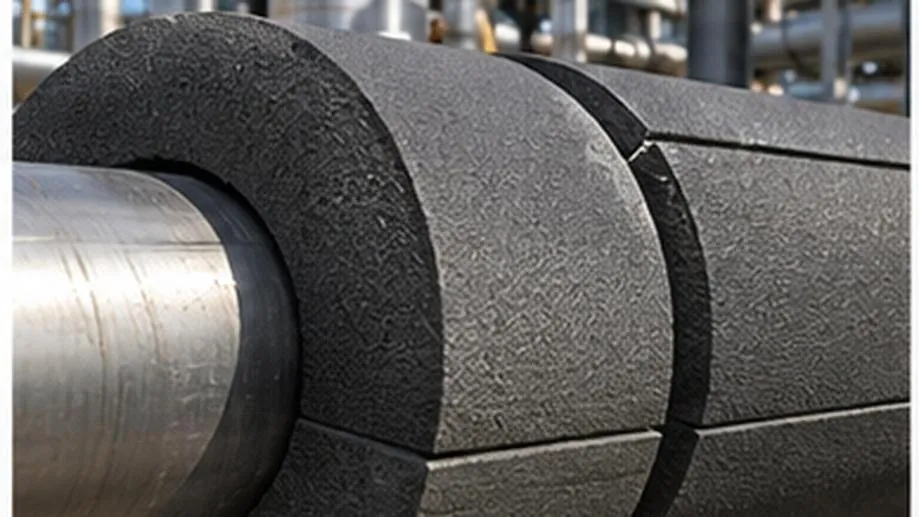
Aerogel blankets offer low thermal conductivity and can help where space or weight is limited, including congested pipe racks and retrofit work. Confirm temperature limits, compression behaviour, facing, handling and installation requirements.
PUR and PIR
PUR and PIR foam products can provide good thermal performance at relatively low thickness in selected lower-temperature and prefabricated systems. Check service temperature, fire and smoke behaviour, facing, moisture protection and chemical compatibility. Do not assume they are suitable for high-temperature or cryogenic service.
No material is best for every pipeline. Select only after checking current manufacturer data and project requirements.
3. Thermal performance and thickness
Thermal conductivity (k or λ) indicates how readily heat passes through a material; lower values generally mean better insulation at the same thickness and test conditions. Compare values measured at similar mean temperatures and using comparable test methods. Thickness depends on process and ambient temperatures, pipe diameter, conductivity, wind, humidity, solar exposure and operating hours. Hot-line calculations may consider heat loss and surface temperature; cold-line calculations may consider heat gain and condensation. A thicker layer usually reduces heat transfer, but the added benefit decreases as thickness increases. Economic thickness balances installed cost against energy savings over the expected service life. Supports, shoes, valves and flanges can create thermal bridges and need specific details.
4. Moisture control and CUI prevention
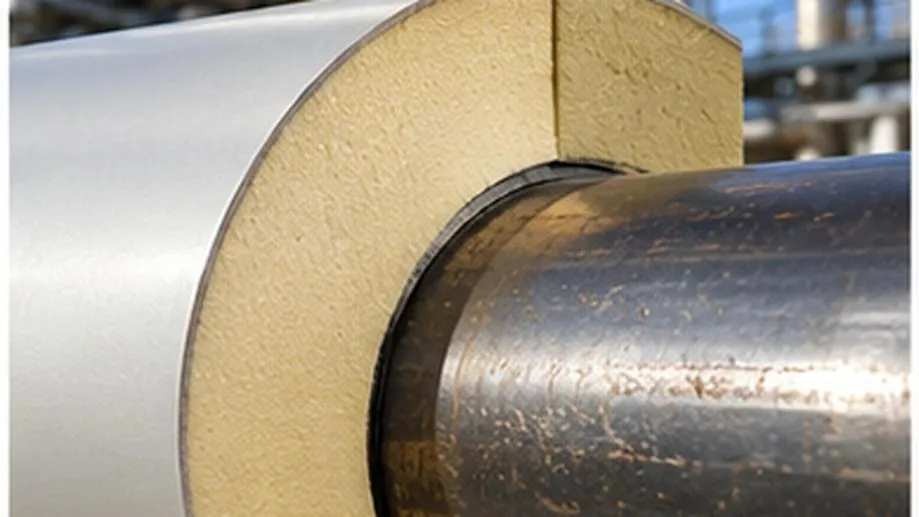
Water can enter through damaged cladding, open seams, unsealed terminations, penetrations, poor drainage or mechanical damage. Wet insulation may lose thermal performance and keep the pipe surface damp, contributing to corrosion under insulation (CUI) where conditions are susceptible. CUI prevention requires coordinated substrate protection, water exclusion, inspection and maintenance; no insulation material alone guarantees prevention. For hot service, use a coating system approved for the substrate and temperature. For cold service, provide a continuous vapour retarder with sealed joints, supports and terminations. Design cladding to shed water and avoid pockets or ledges that trap it. Prioritise inspection at supports, low points, penetrations and damaged cladding.
5. Installation, protection and maintenance
Install only after required pressure tests, NDT, leak checks and coating inspections are complete. The pipe surface must be clean, dry and accepted. Verify product identity, certificates, dimensions and storage condition. Keep insulation protected from water and damage; do not install wet, crushed or contaminated material without assessment. Fit sections closely, maintain specified thickness and avoid excessive compression. Stagger joints in multilayer systems where required. Seal vapour barriers continuously on cold lines, and fit cladding with water-shedding laps while allowing for movement. Keep valves, instruments, drains, vents and safety devices accessible. Use removable covers where regular inspection or maintenance is required.
Routine checks should look for loose cladding, open laps, corrosion stains, water marks, failed bands, exposed insulation and leakage. Use the facility's risk-based inspection process to decide when insulation should be removed. Record findings, repairs and material details in an insulation register. Thermal imaging can help screen for abnormal temperature patterns but does not replace required inspection methods.
6. Procurement checklist and conclusion
A clear requisition should state line numbers, pipe sizes, service and design temperatures, insulation duty, thickness or calculation basis, environment, cladding, coating, project standards and inspection requirements. Evaluate each proposal for temperature range, conductivity, moisture behaviour, compressive strength, fire characteristics, compatibility, availability, installation complexity, maintenance access and lifecycle cost. Request current datasheets and relevant test reports; confirm that product codes match the documentation.
Treat insulation as an engineered asset system. Match the material to the service, calculate thickness, protect against moisture, detail supports and fittings, control installation quality and maintain inspection records. Qian Dynar lists Mineral Wool, Cellular Glass, Aerogel Blankets, PUR and PIR, together with related insulation accessories. Confirm current availability and technical suitability with the supplier and manufacturer at Qian Dynar.
Need Technical Datasheets or Pricing for Pipeline Insulation?
Explore Qian Dynar Sdn. Bhd.’s full industrial insulation materials, cladding, and accessories portfolio, or speak with our technical team to confirm material suitability and project availability.
Related Technical Guides: Cellular Glass vs Mineral Wool | Industrial Thermal Insulation for Oil & Gas Facilities