

What is Cellular Glass Insulation? Benefits & Installation Guide
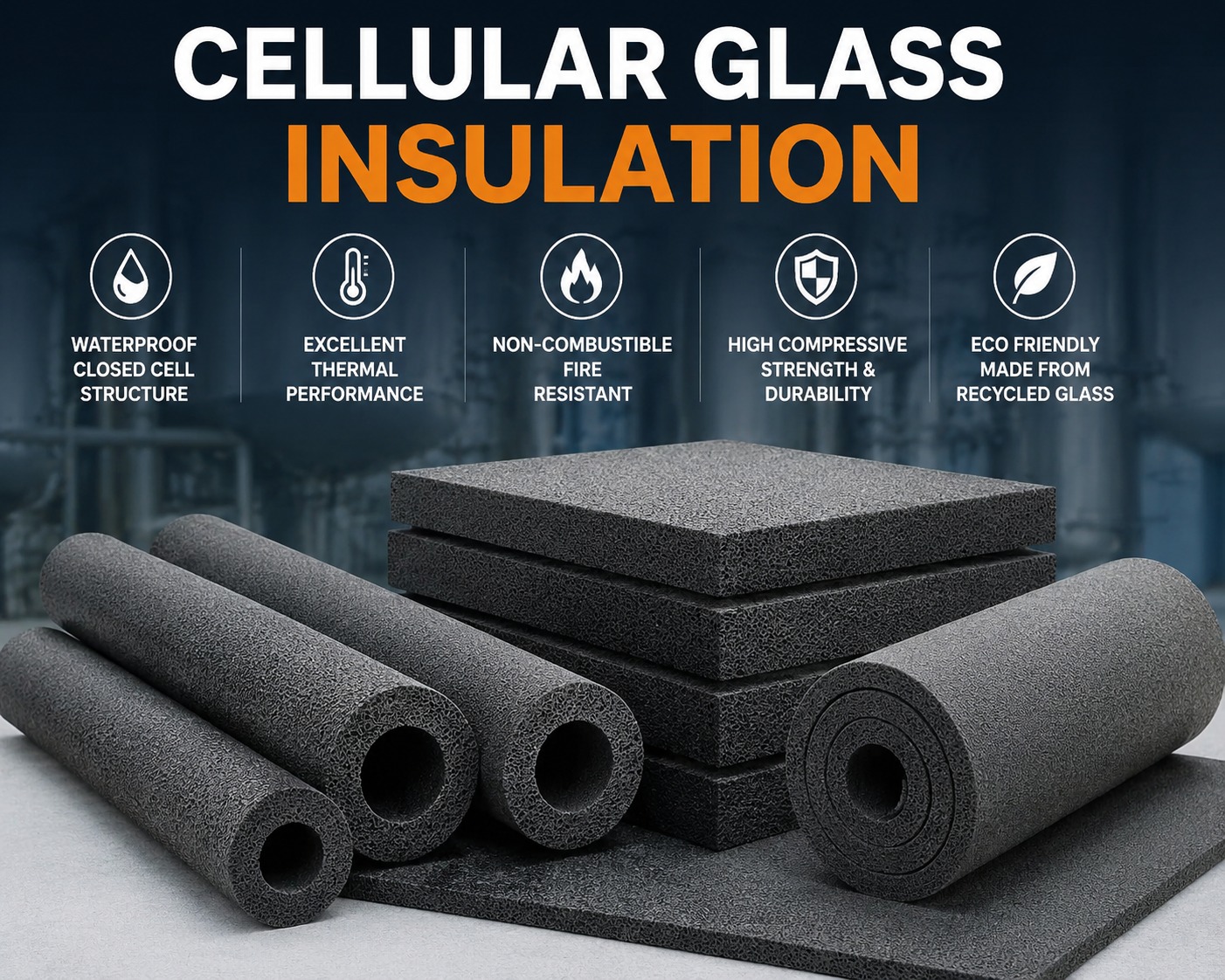
Cellular Glass Insulation is a high-performance thermal insulation material manufactured from recycled glass. During production, millions of sealed glass cells are formed, creating a completely closed-cell structure that is waterproof, non-combustible, and highly resistant to moisture, chemicals, and corrosion.
Because of its exceptional durability and thermal performance, Cellular Glass Insulation is widely used in industrial facilities, LNG terminals, petrochemical plants, pharmaceutical industries, food processing plants, and commercial buildings throughout Malaysia, Singapore, and Indonesia.
Industries that require long-term thermal efficiency and moisture protection often choose Foam Glass Insulation as a reliable solution for both hot and cold applications.
Why Choose Cellular Glass Insulation?
Industrial facilities in Southeast Asia face high humidity, heavy rainfall, and challenging operating conditions. These environments increase the risk of moisture damage and corrosion under insulation (CUI).
Unlike many traditional insulation materials, Cellular Glass Insulation does not absorb water, making it an excellent choice for industrial environments in Malaysia, Singapore, and Indonesia.
Its closed-cell structure provides long-lasting insulation performance while significantly reducing maintenance costs over the system's lifespan.
Key Benefits of Cellular Glass Insulation
1. Completely Waterproof
The closed-cell glass structure prevents water absorption, ensuring consistent insulation performance even in humid climates.
2. Superior Thermal Performance
Cellular Glass Insulation minimizes heat transfer, helping industries reduce energy consumption while maintaining stable operating temperatures.
3. Excellent Cryogenic Insulation
One of the biggest advantages of Cryogenic Insulation using cellular glass is its ability to perform at extremely low temperatures.
It is widely used for:
- LNG Plants
- Liquid Oxygen Systems
- Liquid Nitrogen Storage
- Liquid Hydrogen Facilities
- Cryogenic Pipelines
4. Prevents Corrosion Under Insulation (CUI)
Moisture trapped beneath insulation is one of the leading causes of pipeline corrosion.
Since Foam Glass Insulation absorbs virtually no water, it significantly reduces the risk of corrosion under insulation.
5. High Compressive Strength
Unlike soft insulation materials, Cellular Glass Insulation maintains its shape under heavy mechanical loads, making it ideal for industrial piping and equipment.
6. Fire Resistant
Being manufactured from glass, Cellular Glass Insulation is completely non-combustible and provides excellent fire safety for industrial facilities.
7. Long Service Life
Properly installed Cellular Glass Insulation can last for decades with minimal maintenance, offering excellent long-term value.
Applications of Cellular Glass Insulation
Industrial Pipe Insulation
One of the most common uses is Industrial Pipe Insulation, where thermal efficiency and moisture resistance are critical.
Applications include:
- Steam Pipelines
- Chilled Water Pipes
- Process Piping
- Chemical Pipelines
- HVAC Systems
Cryogenic Systems
Cryogenic Insulation applications include:
- LNG Facilities
- Gas Processing Plants
- Petrochemical Refineries
- Industrial Gas Storage
- Pharmaceutical Plants
Industrial Equipment
Cellular Glass Insulation is also widely installed on:
- Storage Tanks
- Heat Exchangers
- Boilers
- Pressure Vessels
- Reactors
Commercial Buildings
Commercial applications include:
- HVAC Ducts
- Mechanical Rooms
- Cold Storage Facilities
- Refrigeration Systems
Step-by-Step Installation Guide
Proper installation is essential for achieving maximum thermal performance.
Step 1: Surface Preparation
Ensure all equipment and piping surfaces are clean, dry, and free from rust, oil, or contaminants.
Step 2: Measure and Cut
Measure the required dimensions and cut the Cellular Glass Insulation blocks or pipe sections accurately.
Step 3: Apply Adhesive
Use the recommended industrial adhesive compatible with Foam Glass Insulation.
Step 4: Install the Insulation
Secure the insulation tightly around the equipment or piping while maintaining proper alignment.
Step 5: Seal All Joints
Seal every joint carefully to ensure continuous thermal protection and prevent moisture ingress.
Step 6: Install Protective Cladding
Complete the system by installing aluminum or stainless-steel cladding for mechanical protection and weather resistance.
Why Industries in Malaysia, Singapore & Indonesia Prefer Cellular Glass Insulation
Industrial projects across Southeast Asia require insulation materials capable of withstanding high humidity, tropical weather, and demanding operating conditions.
Cellular Glass Insulation has become a preferred choice because it delivers:
- Long-term thermal efficiency
- Excellent moisture resistance
- Reduced maintenance costs
- Superior mechanical strength
- Reliable Cryogenic Insulation
- Outstanding Industrial Pipe Insulation performance
Whether it's a refinery in Malaysia, an LNG facility in Singapore, or a manufacturing plant in Indonesia, Foam Glass Insulation provides dependable insulation for critical industrial applications.
Why Choose Qian Dynar?
Qian Dynar supplies premium Cellular Glass Insulation solutions for industrial projects across Malaysia, Singapore, and Indonesia.
Our insulation products are designed to meet demanding industrial standards while delivering long-term energy efficiency, corrosion protection, and reliable thermal performance for piping systems, cryogenic facilities, storage tanks, and industrial equipment.
With quality products, technical expertise, and dependable support, we help industries build insulation systems that perform efficiently for years.
FAQs
1. What is Cellular Glass Insulation used for?
It is used for industrial piping, storage tanks, cryogenic systems, HVAC applications, LNG facilities, and petrochemical plants.
2. Is Foam Glass Insulation waterproof?
Yes. Its completely closed-cell structure makes it waterproof and resistant to moisture.
3. Why is Cellular Glass Insulation suitable for cryogenic applications?
Its closed-cell construction prevents moisture ingress while maintaining excellent thermal performance at extremely low temperatures.
4. Which industries commonly use Industrial Pipe Insulation?
Oil & gas, petrochemical, LNG, power generation, food processing, pharmaceutical, and chemical industries.
5. Does Cellular Glass Insulation reduce maintenance costs?
Yes. Its durability, corrosion resistance, and long service life help reduce maintenance and replacement costs over time.
Conclusion
Choosing the right insulation material directly impacts energy efficiency, operational reliability, and maintenance costs. Cellular Glass Insulation offers unmatched moisture resistance, excellent thermal performance, outstanding Cryogenic Insulation, and durable Industrial Pipe Insulation for demanding industrial environments.
For projects across Malaysia, Singapore, and Indonesia, Foam Glass Insulation remains one of the most reliable insulation solutions for long-term industrial performance.