

Rain, humidity and heat make insulated pipework a CUI risk across Southeast Asia.
Corrosion Under Insulation (CUI): How to Spot It, Stop It and Protect Your Plant
Insulation exists to save energy, hold process temperatures and keep people safe. Yet the same layer can hide a costly problem. When water gets in and stays against hot or cold steel, corrosion can spread for years without a single visible sign. This is corrosion under insulation, or CUI, and it is a serious concern for refineries, petrochemical sites, power plants and offshore facilities. In the heat, humidity and heavy rain of Malaysia, Singapore and Indonesia, it deserves special attention.
What Is CUI?
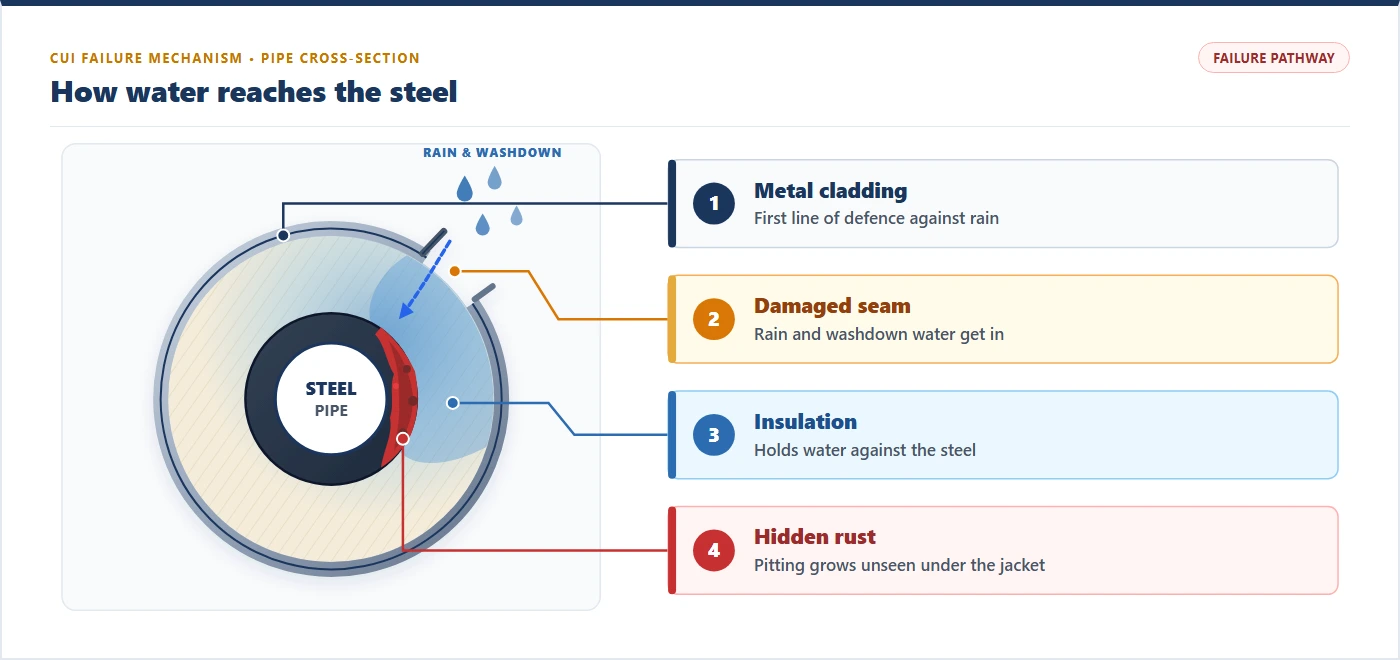
CUI is external corrosion of piping and equipment that develops beneath insulation after moisture reaches the metal surface. The insulation and jacket then work against you. They trap water, limit drying and hide the damage from routine walk-downs. By the time rust stains or a leak appear, the wall loss may already be significant.
Why Tropical Sites Face Higher Risk
Frequent heavy rain, high humidity and regular washdowns all put water on the outside of the jacket. Equipment that heats up and cools down repeatedly then draws moisture in and dries slowly, which can concentrate salts and chlorides. This risk is higher still near coastal and marine locations. Wet and dry cycles are where corrosion tends to be most aggressive.
Temperature Matters
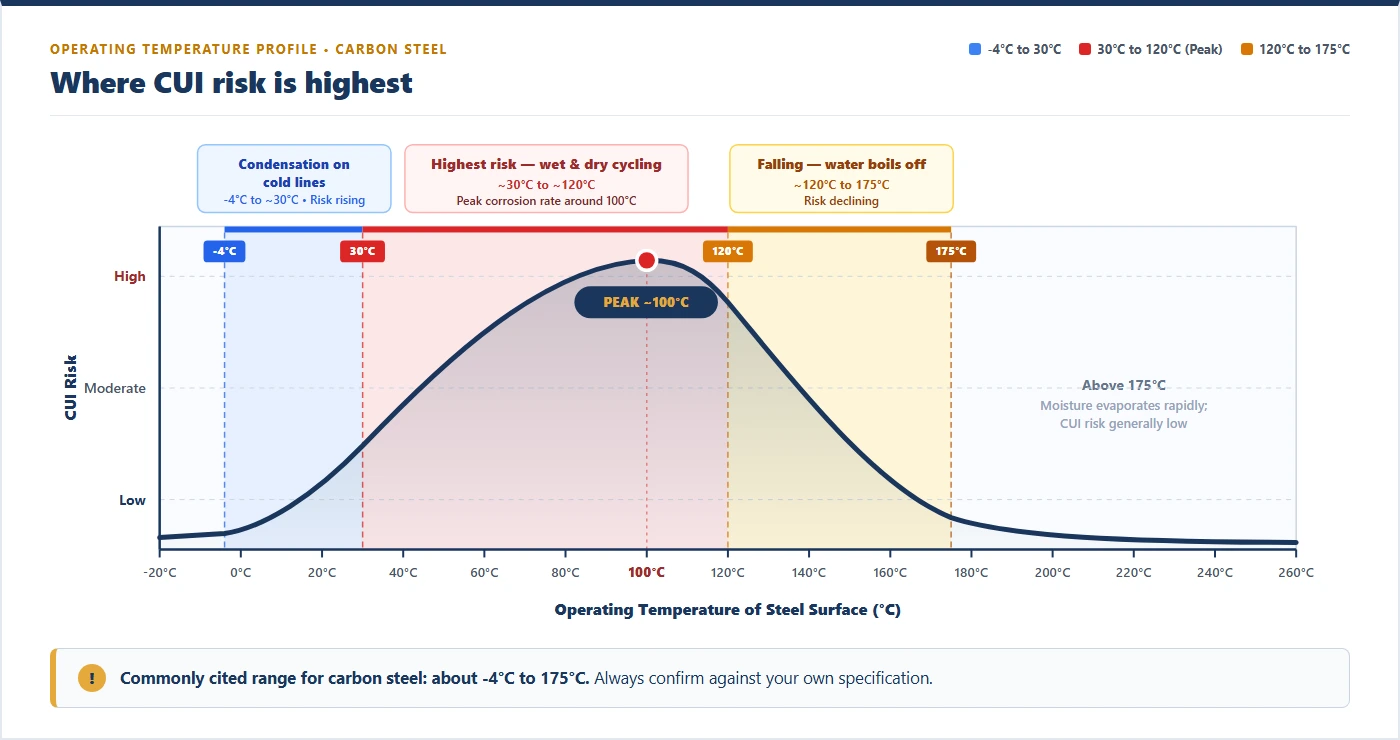
For carbon steel, CUI is commonly cited between about -4°C and 175°C. Cold lines collect condensation, while warm lines in the middle of the range see repeated wetting and drying. At higher temperatures water tends to boil off, so risk usually falls. Stainless steel faces a related threat, chloride stress corrosion cracking, under similar wet conditions. Always check limits against your own specification.
Where CUI Usually Starts
Most failures trace back to a few weak points rather than the whole line. Start your inspections here:
1. Seams and overlaps
Open joints, failed sealant, lifted laps
2. Penetrations
Where supports, nozzles and instruments pass through
3. Low points
Sagging jackets and drain areas where water collects
4. Damaged cladding
Dents, cracks and missing fasteners
Five Ways to Prevent CUI
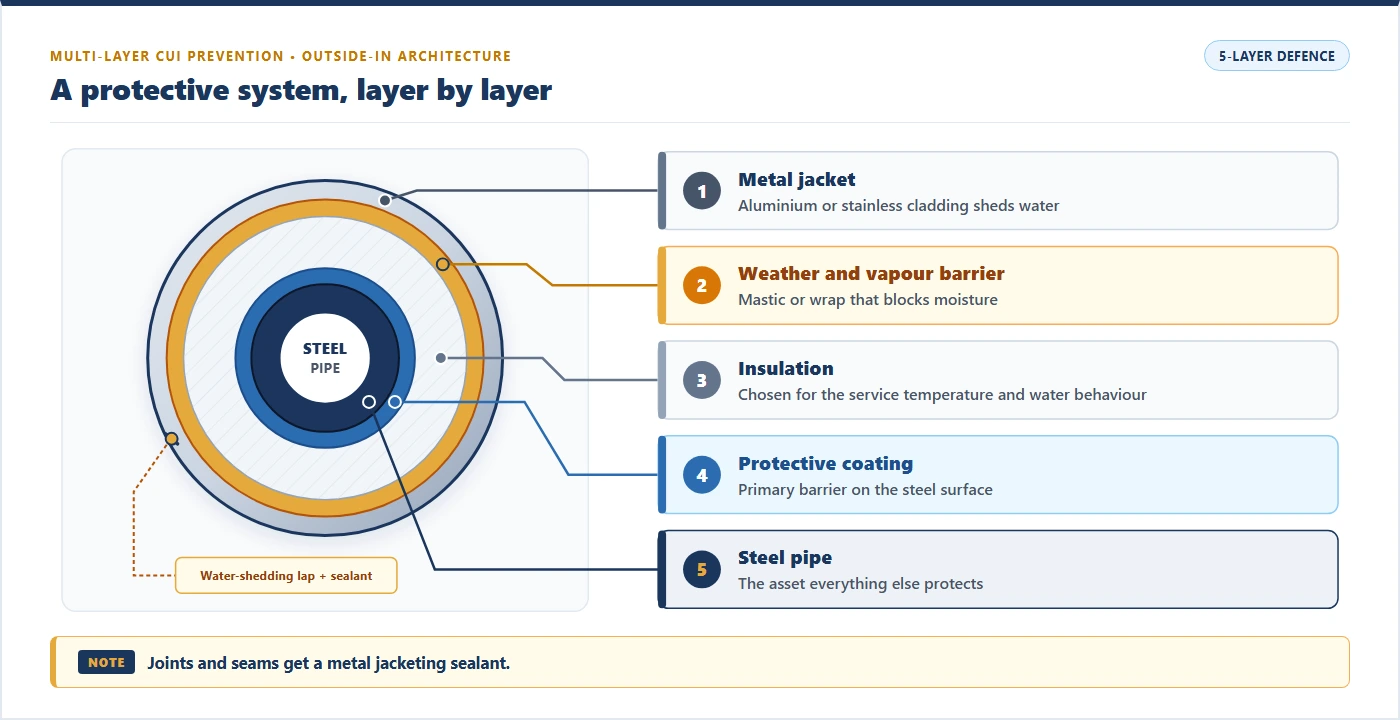
No single product stops CUI. Protection comes from layers that work together, from the steel surface to the outer jacket.
-
1
Coat the steel first. A suitable protective coating applied before insulating is the primary barrier, especially on carbon steel.
-
2
Choose insulation with water in mind. Closed-cell materials such as cellular glass resist water absorption, while fibrous materials can hold moisture once wet. The best choice depends on temperature, location and maintenance plans.
-
3
Seal the system. Weather barrier mastics and vapour barrier wraps, with jacketing sealants at joints and seams, keep water out where it matters most.
-
4
Detail the jacket properly. Fit aluminium or stainless steel cladding with overlaps that shed water downward, secured with the right bands, screws or rivets.
-
5
Inspect and maintain. Repair damaged cladding and failed sealant quickly, and focus inspection effort where risk is highest.
Practical Inspection Tips
- Walk the lines after heavy rain and look for staining, sagging jackets and open seams.
- Fit inspection window plugs at high-risk points so you can check the surface without stripping insulation.
- Record photographs and findings so you can compare condition over time.
- Use qualified inspectors and suitable non-destructive testing where damage is suspected.
Prevention Costs Less Than Repair
Replacing corroded piping means shutdowns, lost production and safety risk. Careful material selection, sound installation and regular inspection cost far less. Qian Dynar supplies insulation materials, chemicals and accessories across Malaysia, Singapore and Indonesia, including cellular glass, mastics, cladding, sealants and inspection window plugs.