
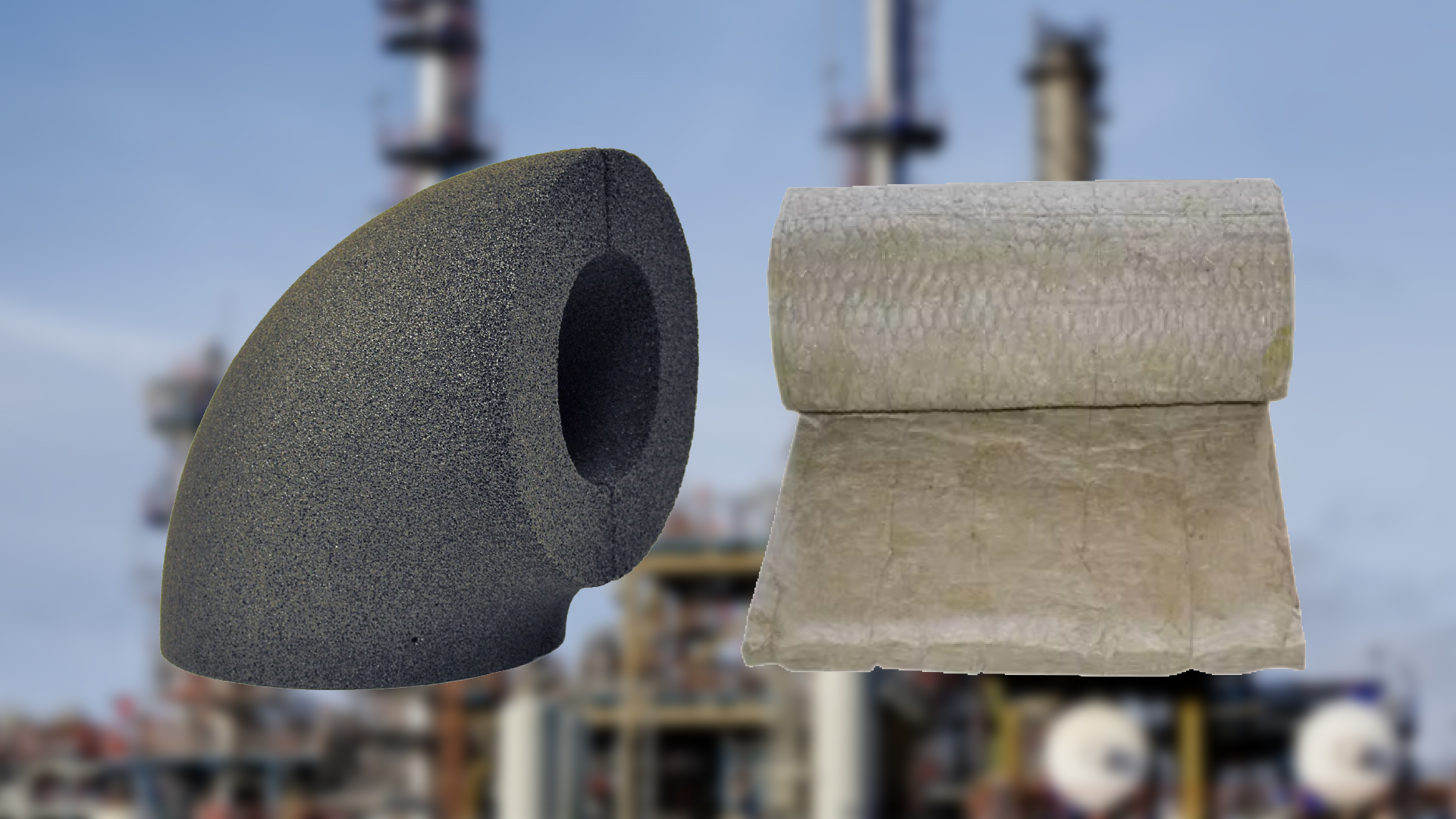

Which One Truly Performs Better?
1. What Exactly Are We Comparing?
2. Thermal Performance
Both materials offer decent insulation properties but not equal in terms of performance. However, cellular glass delivers consistent thermal performance. Its closed-cell structure maintains the same thermal value over time because nothing can enter the cells: no water, no vapour, no oil.
Mineral wool insulates well when it’s dry.
But the moment moisture creeps in, its thermal performance drops, sometimes drastically.
If your application is exposed to weather, humidity, or condensation risks, cellular glass holds its line steadily.
3. Water & Vapour Resistance
This is the turning point.
Cellular glass → 100% water and vapour-proof.
The material is literally impermeable. Moisture cannot enter.-
Mineral wool → Water-resistant, not waterproof.
It absorbs moisture when exposed, increasing weight, reducing performance, and accelerating corrosion.
4. CUI Prevention
CUI (Corrosion Under Insulation) is driven by moisture trapped against steel.
Mineral wool can absorb water, and when combined with fluctuating temperatures, it creates a perfect environment for corrosion.
Cellular glass, on the other hand:
-
stops vapour
-
stops liquid water
-
maintains thickness
-
seals tightly
It removes moisture from the equation, the root cause of CUI.
This makes cellular glass one of the strongest choices for CUI-sensitive environments: refineries, chemical plants, upstream facilities, gas plants, marine, and offshore.
5. Cost Consideration
Mineral wool wins upfront cost, no question. But factor in:
-
replacement cycles
-
maintenance checks
-
moisture-related degradation
-
CUI repairs
-
downtime risks
Then cellular glass often becomes the more economical long-term choice, especially in high-risk or critical lines.
Conclusion
If your application is low-risk, dry, and cost-sensitive, mineral wool works fine. But if you’re running:
-
high humidity lines
-
cryogenic systems
-
hot pipelines with condensation cycles
-
CUI-sensitive assets
-
outdoor insulated piping
-
aggressive chemical environments
Cellular glass clearly stands out.
It’s engineered to keep moisture out and that alone shifts the entire lifecycle performance curve.