

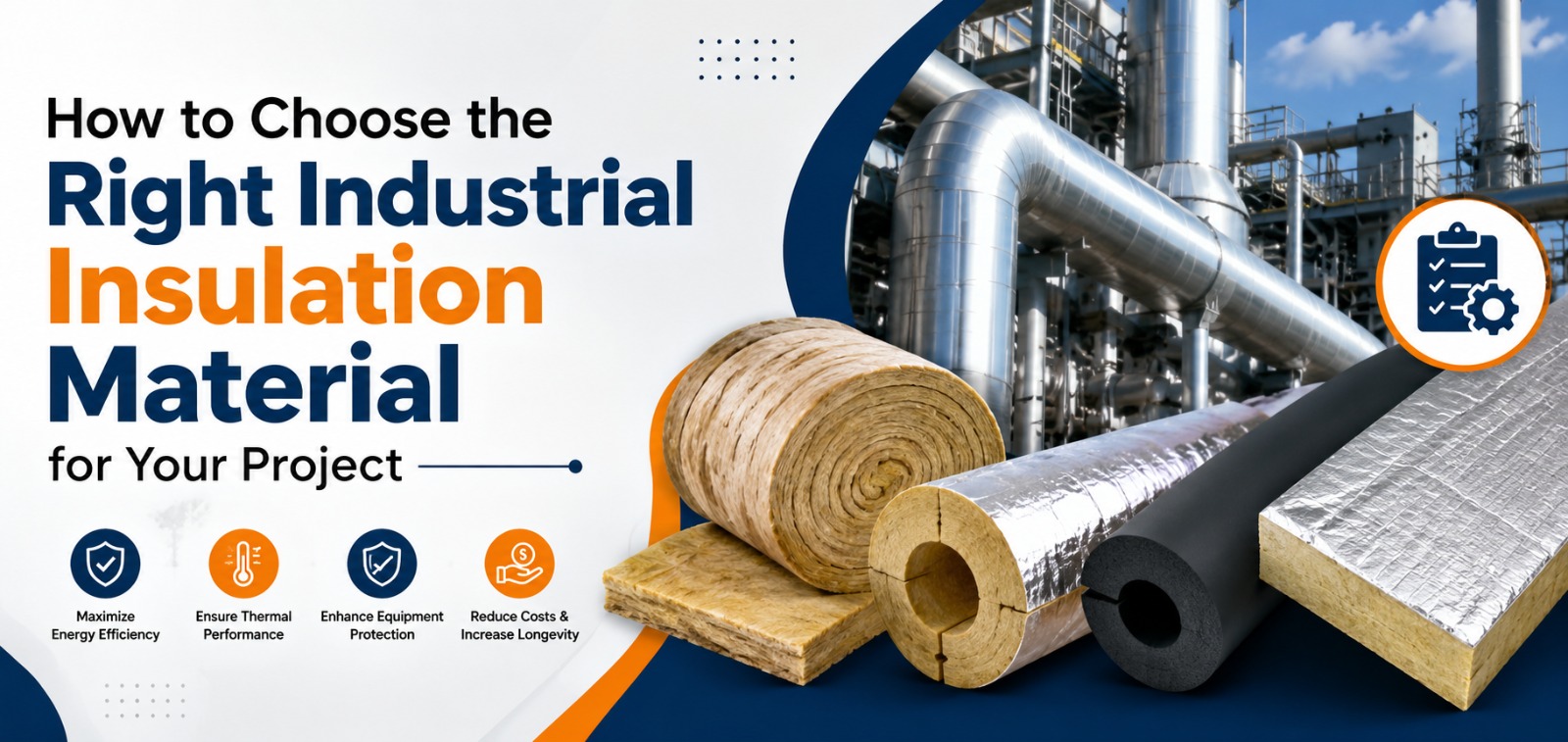
How to Choose the Right Industrial Insulation Material for Your Project
Introduction
Selecting the right industrial insulation material is one of the most important decisions in any industrial project. The insulation system you choose directly affects energy efficiency, operational costs, equipment reliability, workplace safety, and long-term maintenance requirements.
For industries where high humidity and demanding operating environments are common, selecting the appropriate insulation system can significantly improve asset performance while reducing lifecycle costs.
Why Industrial Insulation Matters
Industrial insulation serves a much greater purpose than simply keeping equipment hot or cold. A properly designed insulation system helps facilities operate more efficiently while protecting valuable assets from environmental and operational challenges.
The right insulation solution can help organisations:
- Reduce heat loss and energy consumption
- Improve process efficiency and temperature stability
- Minimise Corrosion Under Insulation (CUI)
- Enhance workplace safety by reducing surface temperatures
- Lower maintenance and replacement costs
- Extend equipment service life
- Support sustainability and carbon reduction initiatives
In tropical climates, high humidity increases the risk of moisture ingress, making insulation selection even more critical.
Industries That Rely on Industrial Insulation
Industrial insulation plays a vital role across numerous industries where process temperature control and equipment protection are essential.
These industries include:
- Oil & Gas
- Petrochemical Processing
- LNG Facilities
- Power Generation
- Marine & Offshore
- Pharmaceutical Manufacturing
- Food & Beverage Processing
- Chemical Plants
- HVAC Systems
- Commercial and Industrial Buildings
Each industry has unique operating conditions, making material selection an important part of project planning.
Key Factors to Consider When Choosing Industrial Insulation
1. Operating Temperature
Every insulation material is designed to perform within a specific temperature range.
For high-temperature applications such as boilers, furnaces, and steam piping, materials like Mineral Wool, Ceramic Fibre, and Calcium Silicate provide excellent thermal stability.
For medium-temperature systems, PIR and PUR insulation offer outstanding thermal efficiency while remaining lightweight and easy to install.
Cryogenic systems, LNG facilities, and low-temperature pipelines require specialised materials such as Cellular Glass and Aerogel that maintain performance under extreme cold conditions.
Selecting insulation outside its recommended operating range can reduce efficiency, shorten service life, and increase maintenance costs.
2. Moisture Resistance
Moisture is one of the biggest challenges for industrial insulation systems, particularly in Southeast Asia.
When water penetrates insulation materials, thermal performance deteriorates and the likelihood of Corrosion Under Insulation (CUI) increases significantly. This hidden form of corrosion can result in costly repairs and unexpected downtime.
Materials with excellent moisture resistance include:
- Cellular Glass
- Aerogel Blanket
- Closed Cell Foam
These materials help minimise water absorption while protecting piping and equipment from long-term corrosion.
3. Thermal Performance
The primary function of insulation is to reduce heat transfer.
Materials with lower thermal conductivity provide better insulation performance while allowing thinner insulation thicknesses.
Effective thermal insulation can deliver several operational benefits, including:
- Reduced energy consumption
- Stable process temperatures
- Improved equipment efficiency
- Lower greenhouse gas emissions
- Better return on investment throughout the asset lifecycle
Rather than focusing solely on initial purchase price, organisations should evaluate long-term energy savings and lifecycle performance.
4. Fire Safety
Fire protection remains an essential consideration for industrial facilities.
Non-combustible insulation materials help reduce fire risks while complying with international safety standards.
Common fire-resistant insulation materials include:
- Mineral Wool
- Ceramic Fibre
- Calcium Silicate
These materials are widely used in power plants, refineries, manufacturing facilities, and processing plants where elevated operating temperatures are common.
5. Corrosion Under Insulation (CUI)
Corrosion Under Insulation is one of the most expensive maintenance issues affecting industrial facilities.
It commonly occurs when moisture becomes trapped beneath insulation, allowing corrosion to develop unnoticed until significant damage has occurred.
Facilities operating in offshore environments, refineries, LNG plants, and chemical processing facilities should prioritise insulation materials that minimise moisture penetration.
Solutions such as Aerogel and Cellular Glass have become increasingly popular because of their excellent moisture resistance and ability to reduce CUI risks.
Comparing Common Industrial Insulation Materials
|
Material |
Typical Applications |
Key Advantages |
|
Mineral Wool |
Boilers, steam lines, industrial equipment |
Excellent fire resistance, thermal performance, acoustic insulation |
|
Cellular Glass |
Cryogenic systems, LNG facilities, underground pipelines |
Waterproof, high compressive strength, long service life |
|
Aerogel Blanket |
Offshore platforms, refineries, space-constrained equipment |
Ultra-low thermal conductivity, lightweight, moisture resistant |
|
PIR & PUR |
Cold rooms, refrigeration plants, chilled water systems, HVAC |
High thermal efficiency, moisture resistance, easy installation |
Each insulation material offers unique strengths. The best solution depends on operating temperature, environmental conditions, available installation space, and project objectives.
Best Practices for Selecting Industrial Insulation
Before making a final decision, consider the following:
- Match insulation materials to operating temperature requirements.
- Assess environmental conditions such as humidity and moisture exposure.
- Consider long-term lifecycle costs instead of only initial investment.
- Ensure compliance with relevant industrial standards and project specifications.
- Select durable materials capable of delivering consistent long-term performance.
- Work with an experienced insulation supplier who can recommend solutions based on your specific application.
A refinery operating at temperatures above 400°C requires a very different insulation strategy from a chilled water pipeline operating below 5°C. Selecting the wrong material can reduce efficiency, increase maintenance costs, and shorten equipment life.
Why Work with an Experienced Insulation Supplier?
Choosing the right insulation material is only part of a successful project. Equally important is working with a supplier who understands industrial applications and can recommend solutions tailored to your operating conditions.
An experienced supplier can provide:
- High-quality insulation materials
- Technical consultation and product selection
- Project-specific recommendations
- Compliance with international quality standards
- Reliable regional supply and delivery
- Ongoing technical support
Conclusion
Industrial insulation is a long-term investment that affects plant efficiency, equipment reliability, and operational costs. Selecting the right insulation material requires careful evaluation of operating temperature, moisture exposure, fire safety requirements, and corrosion risks.
Rather than focusing solely on upfront cost, businesses should consider the total lifecycle value of an insulation system, including energy savings, maintenance reduction, and asset protection.
Every project has unique requirements. Working with an experienced industrial insulation supplier ensures that the most suitable materials are selected for your specific application, helping your facility achieve greater efficiency, improved safety, and reliable long-term performance.